
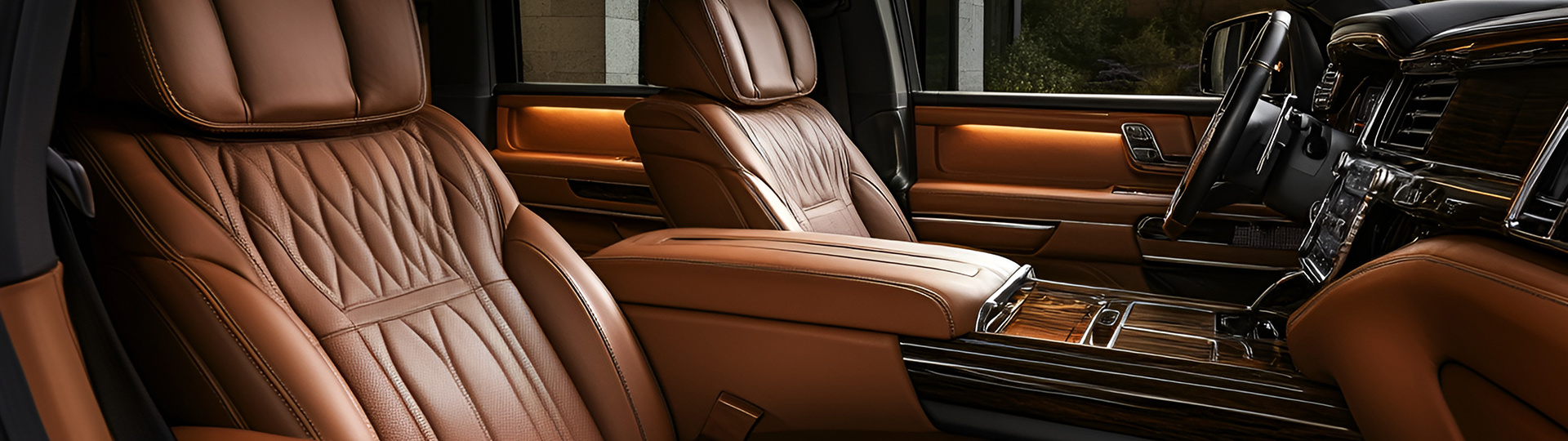
What are the differences between PVC leather and PU leather?
Release Time:
2022-01-10
Information summary: Generally, people refer to synthetic leathers other than genuine leather, such as PVC leather and PU leather, as artificial leather or imitation leather. PVC leather and PU leather are both polyvinyl chloride (a type of plastic), but the manufacturing processes of these two products differ.
Leather Identification: Key Differences Between PU Leather and PVC Leather
Synthetic leathers such as PVC and PU leather are often referred to as artificial leather or imitation leather. Both PVC and PU leather are types of polyvinyl chloride (a type of plastic), but their manufacturing processes differ.
In the PVC leather manufacturing process, plastic granules are first melted and mixed into a paste. This paste is then evenly applied to a T/C knitted fabric base to the specified thickness. Subsequently, it goes into a foaming oven for foaming, giving it the flexibility to be used in various products and specifications. After foaming, surface treatments (dyeing, embossing, polishing, matting, sanding, etc.) are performed according to the specific product requirements.
The manufacturing process of PU leather is more complex than that of PVC leather. The base fabric of PU leather is a strong white canvas. Besides being coated on the surface of the base fabric, the base fabric can also be enclosed within, making the base fabric invisible from the outside. PU leather has better physical properties than PVC leather, including better abrasion resistance, softness, tensile strength, and breathability (PVC leather lacks breathability).
The texture of PVC leather is created using steel embossing rollers; the texture of PU leather is created by first heat-pressing a patterned paper onto the semi-finished leather surface. After cooling, the paper is separated, and surface treatment is performed.
PU leather is more than twice the price of PVC leather, with some specialty PU leathers costing 2-3 times more than PVC leather. Generally, the patterned paper used for PU leather can only be used 4-5 times before being discarded; embossing rollers have a longer lifespan. Therefore, PU leather is more expensive than PVC leather; the applications of these two materials also differ.
In footwear, PVC leather is often used for linings or areas not subject to significant weight or in children's shoes; PU leather can be used for the outer material or areas subject to significant weight. In handbags, PVC leather is more commonly used because the contents of a handbag, unlike feet in shoes, do not generate much heat and do not put significant weight on the material.
The difference between PU and PVC leather is relatively easy to identify. From the edge, the base fabric of PU leather is much thicker than that of PVC leather. The feel is also different: PU leather feels softer, while PVC leather feels harder. Burning can also be used to distinguish them; PU leather has a much fainter smell than PVC leather. (Artificial leather/synthetic leather)
Related News


Contact us soon
Tel: 86-18862971929
Address: No. 1, Linzi Industrial Park, Rugao City, Jiangsu Province
Email: 13809083313@126.com
Copyright © 2025 Jiangsu Xiangshun Textile Co., Ltd. Powered by:www.300.cn 丨 SEO